
Description
Chongqing 7 Days 6 Nights | Customized Private Tour Package
Why Choose Our Chongqing 7 Days 6 Nights Itinerary
If you’re planning a comprehensive trip to Chongqing, this Chongqing 7 Days 6 Nights itinerary is designed just for you.
Our Chongqing 7 Days 6 Nights package covers all the highlights that international travelers most want to see: the 8D “Magical Mountain City,” World Cultural Heritage sites, World Natural Heritage sites, Yangtze River scenery, and authentic hot pot.
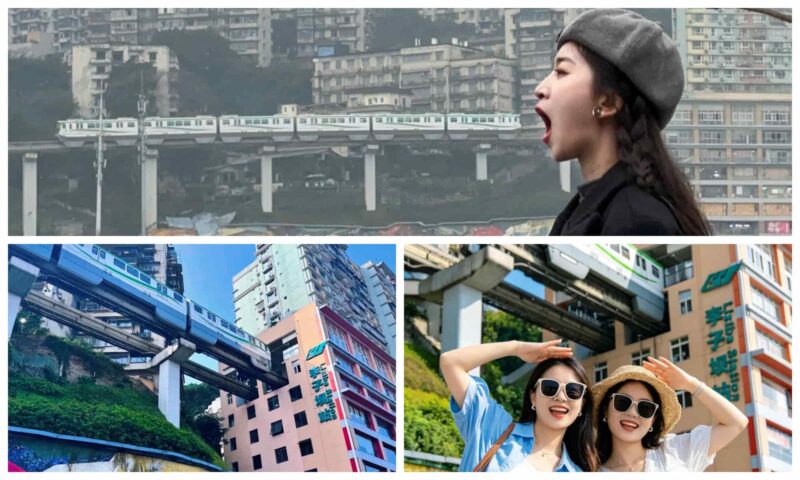
Chongqing is a city built on mountains. The light rail runs through buildings, elevators save you from climbing hills, and the night views are as stunning as those in Hong Kong. It’s easy to get lost when traveling on your own, as maps here are often inaccurate.
By choosing our private tour, you’ll be accompanied by a professional driver and tour guide throughout your trip. All you need to do is focus on enjoying the scenery.
If you’d like to know the specific daily departure times and hotel arrangements, please contact our customer service via the floating tool on the right side of the website to request a detailed itinerary for free.
Chongqing 7 Days 6 Nights — Day 1: Arrival in Chongqing, Getting to Know the “Mountain City”
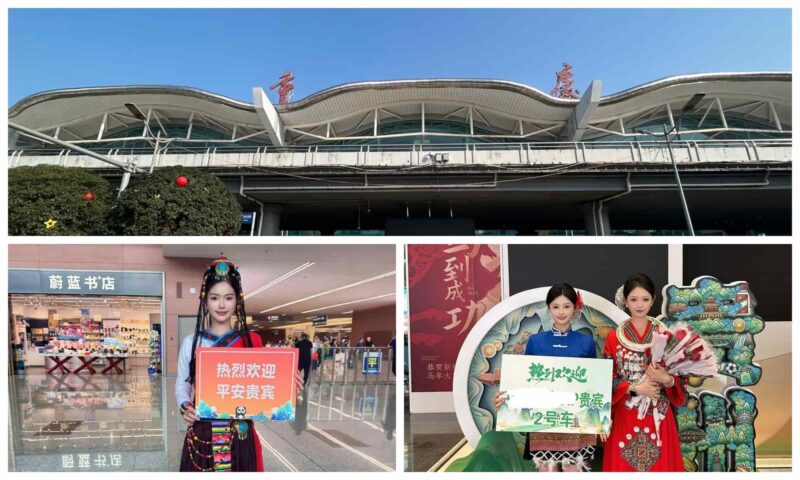
Upon arrival at Chongqing Jiangbei International Airport or Chongqing North Railway Station, our driver will be waiting for you at the exit holding a sign. You’ll be taken directly to your downtown hotel to check in, rest, and settle in.
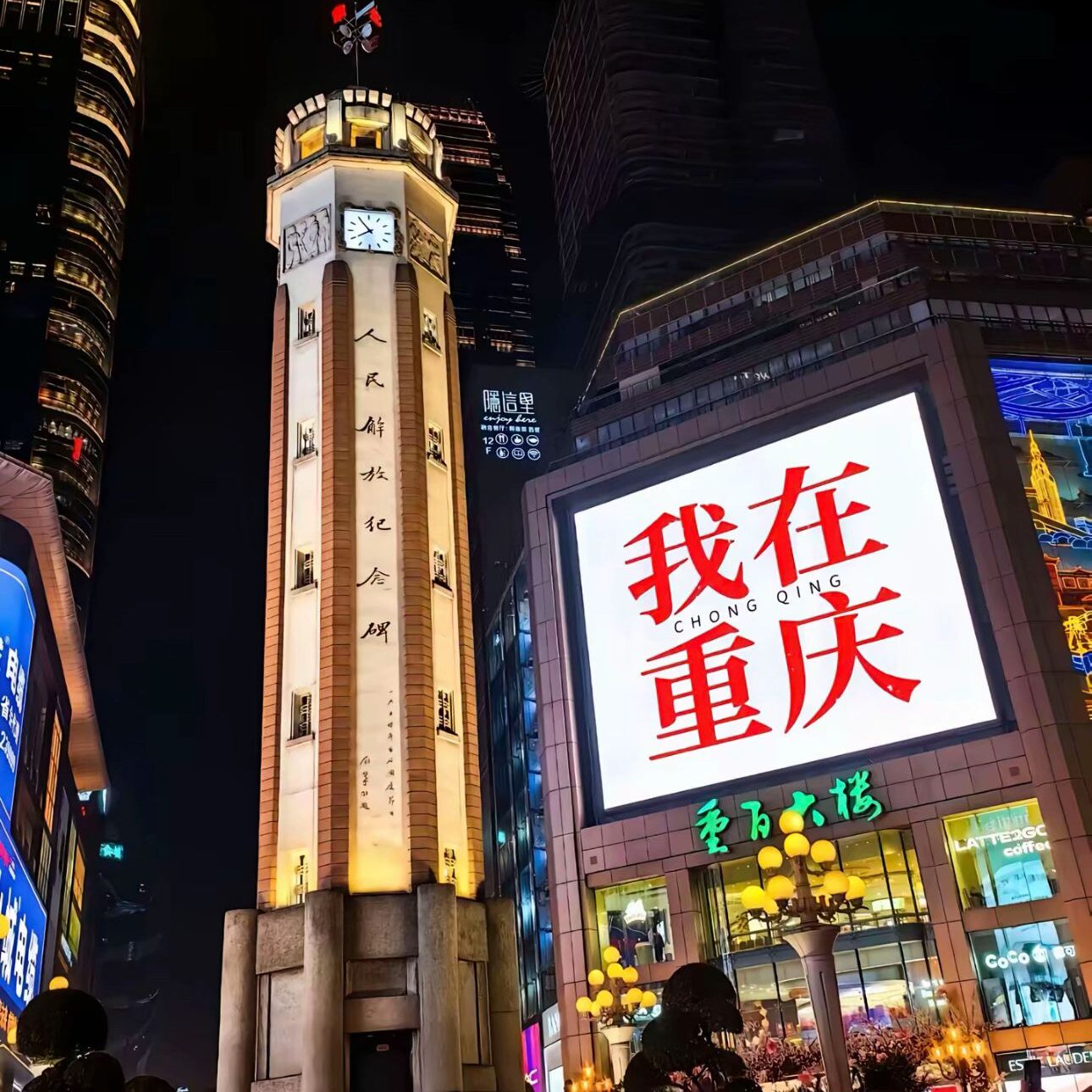
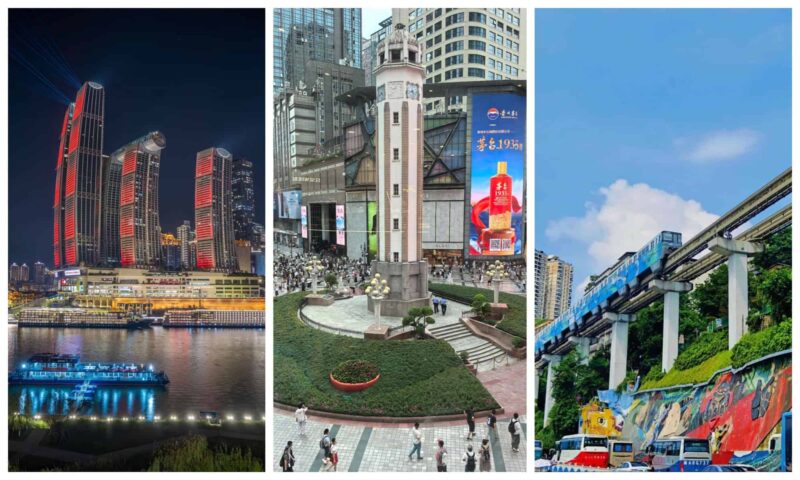
In the afternoon, you’re free to explore the area around your hotel. We recommend taking a stroll along Jiefangbei Pedestrian Street.
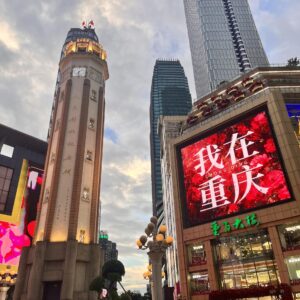
The full name of Jiefangbei is the “Monument to the Victory in the War of Resistance Against Japanese Aggression and the People’s Liberation,” built in 1947. It is the only monument in all of China dedicated to commemorating the victory in the War of Resistance.
The monument stands 27.5 meters tall and features four clocks at the top that chime on the hour.
The area surrounding Jiefangbei is Chongqing’s most bustling commercial district. Within a 1-kilometer radius, there are more than a dozen large shopping malls, including the Global Financial Center, Times Square, and Metropolis.
This is also where you’ll find some of the best people-watching in Chongqing. Locals joke that “you won’t realize you got married too early until you come to Chongqing.” While this is said in jest, it does highlight just how lively the streetscape is here.
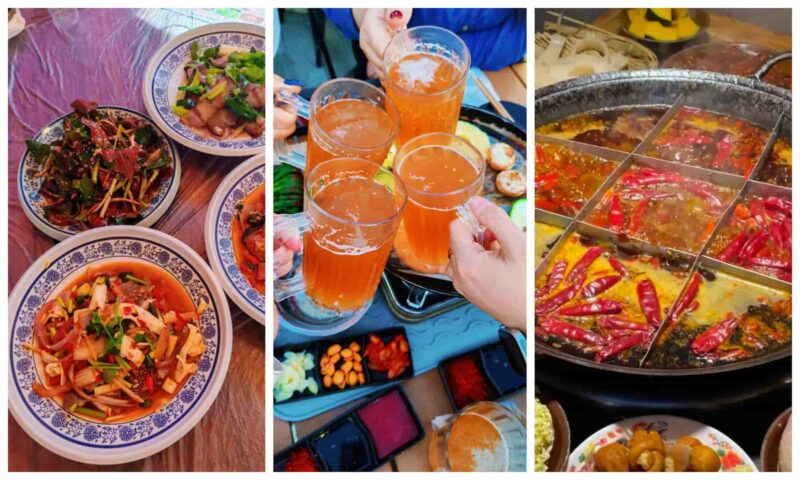
There are plenty of restaurants and food stalls in the area. Start by trying a bowl of Chongqing-style noodles.
The noodles are chewy, and with over a dozen seasonings, they’re spicy, numbing, savory, and fragrant. It’s a staple breakfast for Chongqing locals every morning.
If you can’t handle spice, just tell the owner to “skip the chili.” The clear broth version is also delicious.
In the evening, head to Hongyadong.
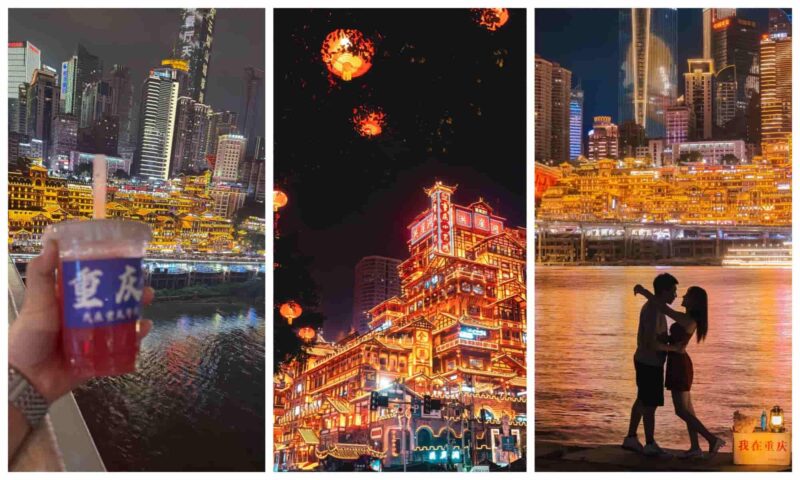
Hongyadong is Chongqing’s most famous spot for night views. It’s a complex of stilted buildings, 11 stories high, built into the mountainside and facing the Jialing River.
The most amazing thing is that when you enter on the first floor, you’re on a street, and when you exit on the 11th floor, you’re still on a street. That’s just how Chongqing’s terrain is, with its ups and downs.
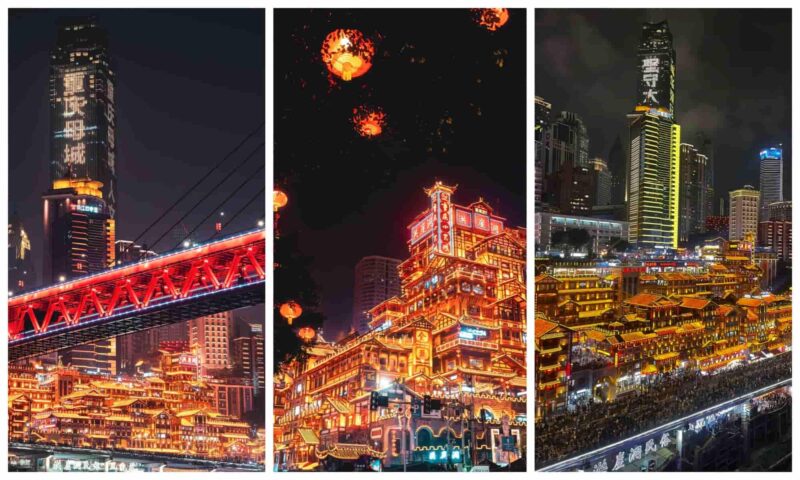
Hongyadong’s exterior resembles the Bathhouse from Hayao Miyazaki’s film Spirited Away. The lights come on at 6:30 p.m., and the golden glow illuminates the entire complex, reflecting off the Jialing River to create a truly magical scene.
Many tourists come every day to take photos. The best spot for photography is on the Qiansimen Bridge across from Hongyadong. Your tour guide will take you there and help you find the best angle.
Inside Hongyadong, you’ll find restaurants, bars, souvenir shops, and cafes. You can stroll around and pick up some hot pot seasoning or Chen’s Twisted Sesame Snacks from Ciqikou as souvenirs.
From the observation deck on the 11th floor, you can see the Jialing River and the Jiangbeizui Financial District across the river. The night view is especially stunning.
The first day features a relaxed itinerary to help you gradually adjust to the rhythm of this “Mountain City.”
Day 2 of Your Chongqing 7 Days 6 Nights Tour: City Highlights and the 8D Magic Experience
After breakfast, set out to explore the highlights of downtown Chongqing.
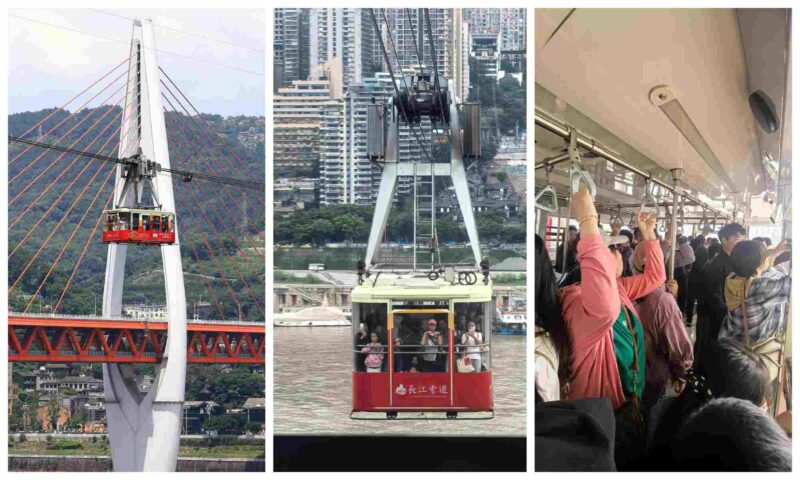
The first stop is the Yangtze River Cable Car.
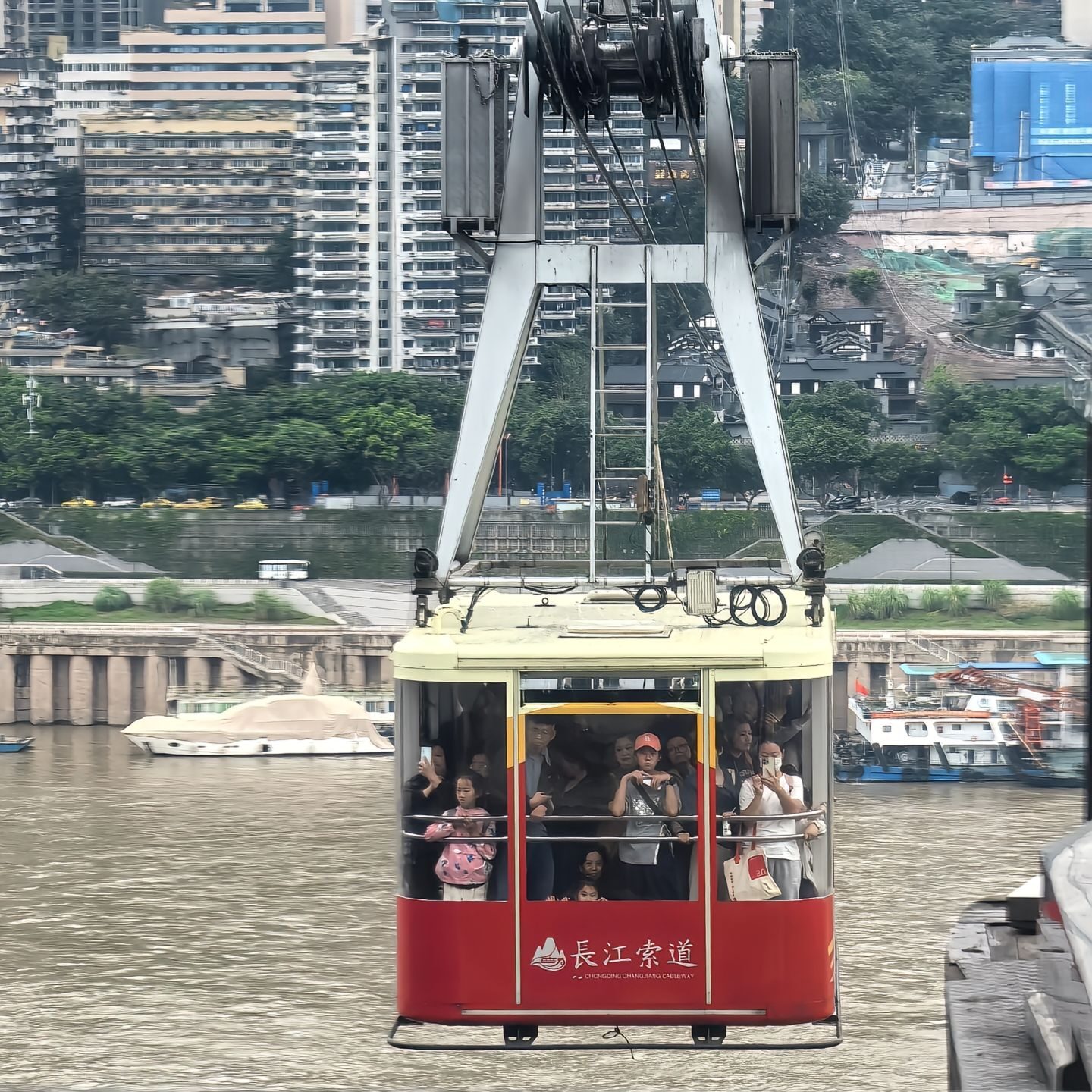
Built in 1987, the Yangtze River Cable Car is China’s only passenger cable car still in operation that crosses a river. It connects Yuzhong District and Nan’an District, spans 1,166 meters, travels at a speed of 6 meters per second, and takes about 5 minutes for a one-way trip.
The cable car cabin is a large metal box that can seat 50 people at a time. As the cabin glides slowly out of the station, you’ll see the roaring waters of the Yangtze River below, with densely packed skyscrapers and green mountains lining both banks.
On a clear day, you can see Nanshan Mountain and Chaotianmen Wharf in the distance. The cabin may sway slightly when it reaches the center of the river, but don’t worry. It’s perfectly safe.
The Yangtze River Cable Car has been in operation for nearly 40 years. It used to be a means of transportation for Chongqing residents crossing the river, but has now become a tourist attraction.
Many movies and variety shows have been filmed here, such as Crazy Stone and The Challenge. We’ll purchase your tickets in advance to help you avoid the one- to two-hour peak waiting times.
Next, we’ll head to Liziba Light Rail Station.
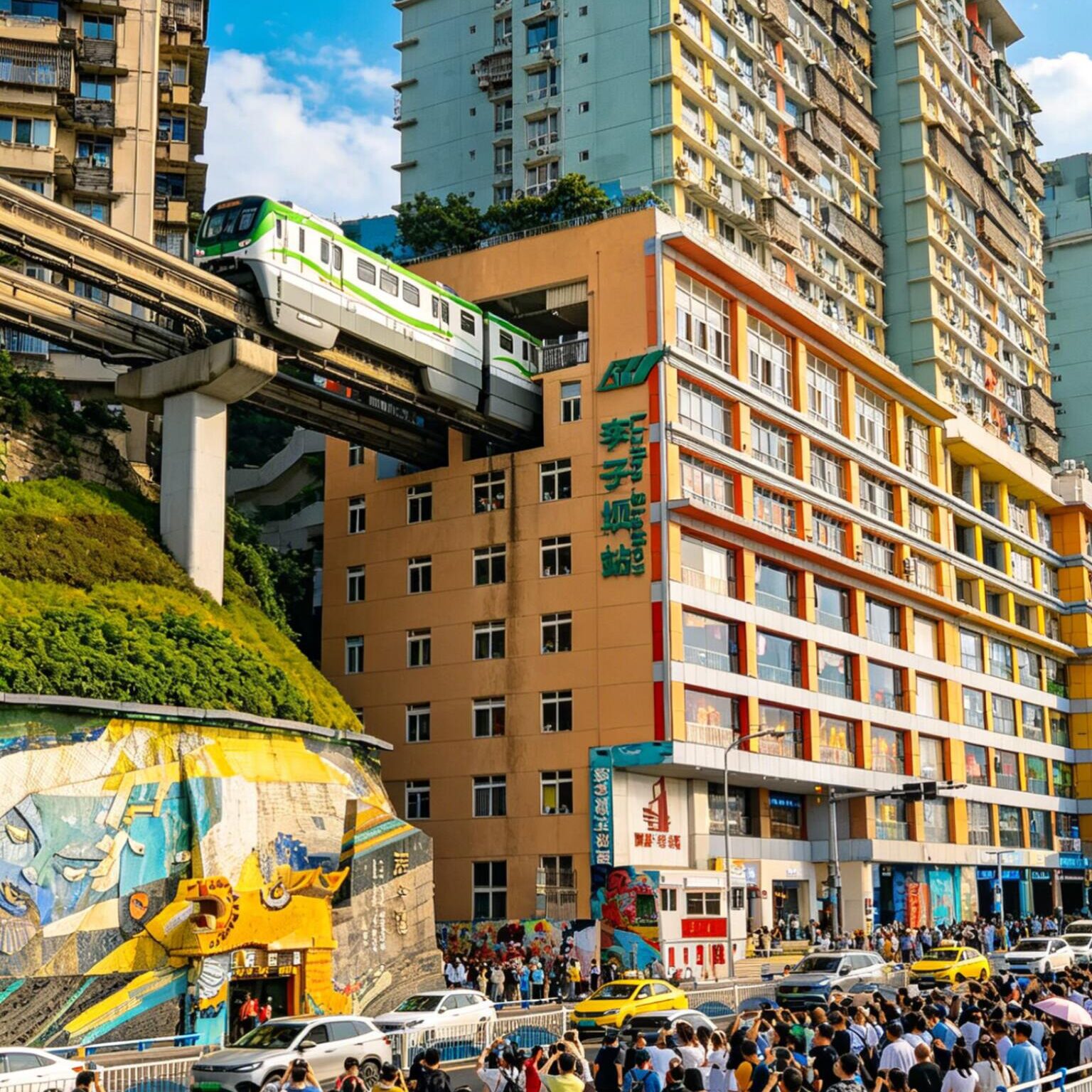
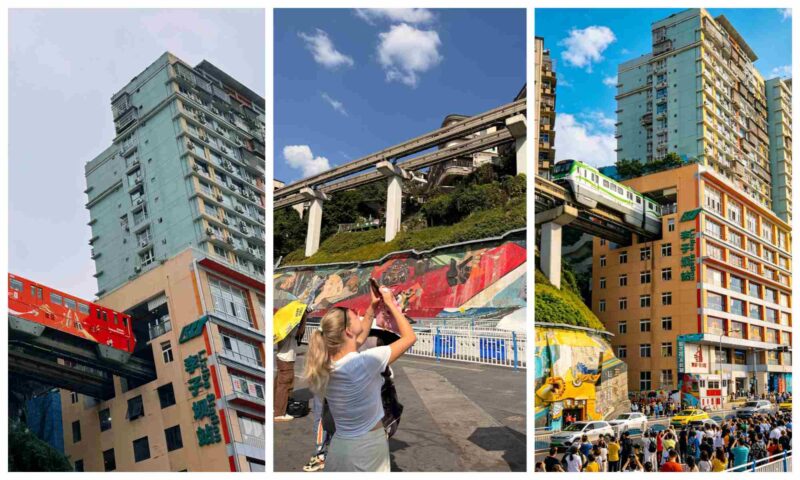
Liziba Station is a stop on Chongqing Light Rail Line 2. What makes it truly unique is that the light rail runs directly through a 19-story residential building.
The station is located on the 6th through 8th floors of the building, with the top 10 floors housing residents and the bottom 5 floors housing shops.
As the light rail pulls into the station, it looks like a long dragon slithering into the building. A sight you can only see in Chongqing.
This design wasn’t intended to attract attention, but rather because of Chongqing’s limited land availability. With its many mountains and scarce flat land, road construction and building development had to accommodate each other.
The light rail and the residential building were designed and constructed simultaneously, and the tracks utilize special vibration-damping technology, so residents in the building can barely hear any noise.
The best vantage point is along the roadside below Liziba Station, where there’s a designated photo area. Tour guides will time the train’s arrival. Trains run every 5 minutes, so you can capture the full scene of the train passing through the building.
We recommend filming a video, as it’s even more impressive than a still photo.
In the afternoon, visit the Ciqikou Ancient Town.
Located in Chongqing’s Shapingba District, Ciqikou Ancient Town has a history of over 1,000 years.
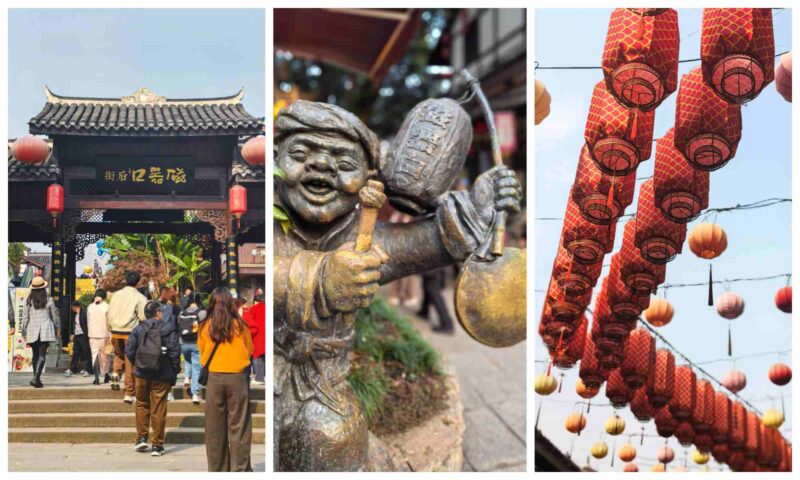
During the Ming and Qing dynasties, it served as a port for the production and trade of porcelain, hence its name, Ciqikou.
The town’s main street is paved with bluestone slabs, approximately 3 meters wide and 800 meters long, lined on both sides by wooden structures in the Ming and Qing architectural styles.
As you enter the ancient town, the first scents you’ll notice are those of hot pot base and Chen’s twisted doughnuts.
The street is lined with many snack stalls selling treats such as Chen’s twisted doughnuts, mao xue wang, dried bean curd sheets, and handmade glutinous rice cakes.
Chen’s twisted doughnuts are Ciqikou’s most famous specialty. They come in sweet, salty, and spicy varieties. Fresh out of the fryer, they’re crispy and crunchy, and you can sample them for free.
There are several small attractions to see within the ancient town. Baolun Temple is a 600-year-old temple where, according to legend, Emperor Jianwen of the Ming Dynasty took refuge while fleeing.
The Hanlin Academy was a place where scholars studied during the Qing Dynasty and features an exhibition on the imperial examination system. There is also a Folk Customs Museum showcasing old artifacts from Chongqing and local wedding customs.
The most charming part of Ciqikou isn’t the main street, but the small alleys off to the side. In these alleys, you’ll find teahouses where, for 10 yuan, you can sit all afternoon sipping tea from a covered bowl while watching locals play mahjong and chat.
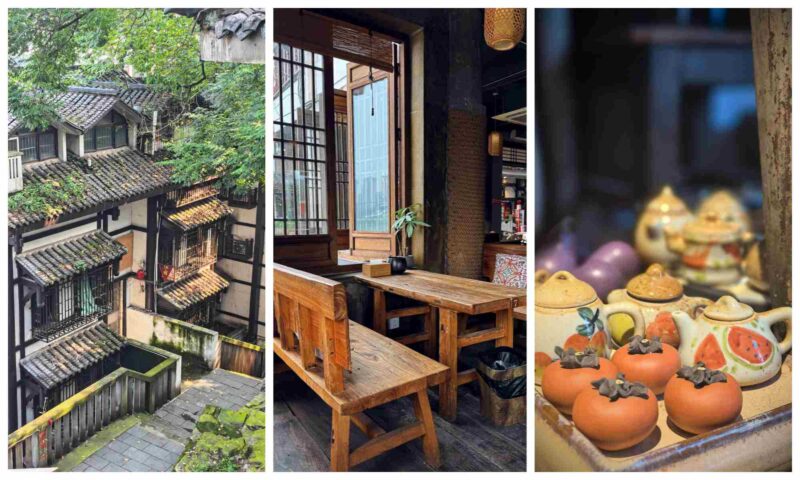
There are also some independent shops and art studios. Perfect for a leisurely stroll.
Take a stroll along the Mountain City Trail in the evening.
The Mountain City Trail is Chongqing’s most distinctive walking path, built on the southern cliffs of the Yuzhong Peninsula.
It’s not a flat path but consists of steps, ramps, and suspended walkways. With a total length of about 1.5 kilometers, it takes roughly one hour to complete the entire route.
The trailhead is on Zhongxing Road. As you walk uphill, you’ll see old Chongqing residential buildings and stilt houses on your left, with a cliff on your right and the Yangtze River below.
Along the way, you can see many historic buildings, such as Houlu, the former site of the French Benevolent Hall, and the First Waterworks Tower. Most of these buildings are over 100 years old. Some are abandoned, while others are still inhabited.
When you reach the suspended walkway, the floor consists of glass and metal plates, with a cliff dozens of meters high directly below. It’s quite thrilling.
This spot offers the best views of the Yangtze River and Nan’an District. You can clearly see the cargo ships coming and going on the river. At dusk, the setting sun casts a golden glow across the river, creating a particularly beautiful scene.
The trail includes some steps, so we’ll pace ourselves and take breaks whenever you get tired. We recommend wearing comfortable sneakers.
In the evening, we’ll enjoy an authentic Chongqing hot pot.
Chongqing hot pot is the city’s calling card. Almost every tourist who visits Chongqing makes a point of trying it at least once. An authentic Chongqing hot pot broth is made with beef tallow. It’s spicy and numbing, and the flavor becomes more aromatic the longer it simmers.
Must-try ingredients include beef tripe, duck intestines, beef esophagus, tender beef slices, chewy beef slices, and crispy fried pork.
Beef tripe is ready to eat after just 8 seconds in the broth, with a crisp yet tender texture. Duck intestines should be dipped back and forth in the pot for about 15 seconds.
Once they curl up, they’re done. Crispy pork is freshly fried and can be eaten as is or added to the hot pot. If you don’t eat spicy food, you can opt for a “yuan yang” pot, half spicy broth and half clear broth. The clear broth is simmered from bones and is also very flavorful.
We’ll take you to a hot pot restaurant frequented by locals, not the kind that caters specifically to tourists.
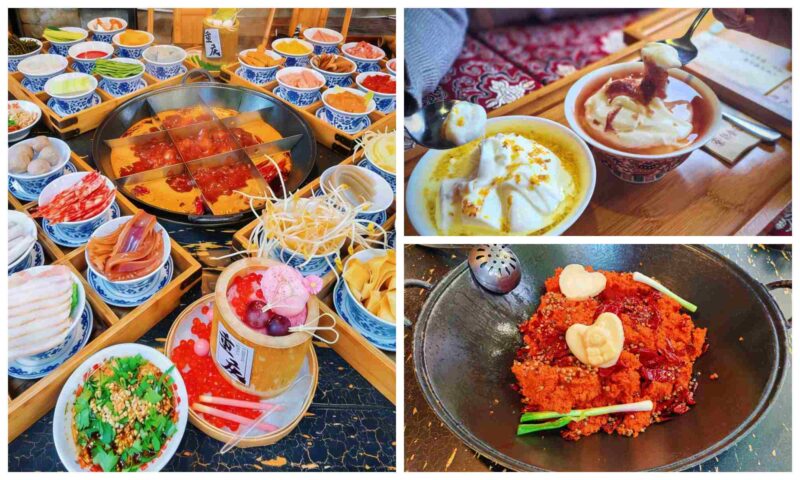
Your tour guide will help you order and teach you how to prepare the dipping sauce (sesame oil + minced garlic + chopped scallions + oyster sauce), ensuring you enjoy an authentic dining experience.
Day 3 of Your Chongqing 7 Days 6 Nights Package: Dazu Rock Carvings, a UNESCO World Heritage Site
After breakfast, we’ll drive to Dazu District, a journey of about 2 hours. The Dazu Rock Carvings are a UNESCO World Heritage Site, inscribed on the list in 1999. Along with the Mogao Caves in Dunhuang, the Yungang Grottoes, and the Longmen Grottoes, they are collectively known as China’s Four Great Grottoes.
We’ll focus our tour on the Baoding Mountain Scenic Area.
Baoding Mountain is the most essential part of the Dazu Rock Carvings.
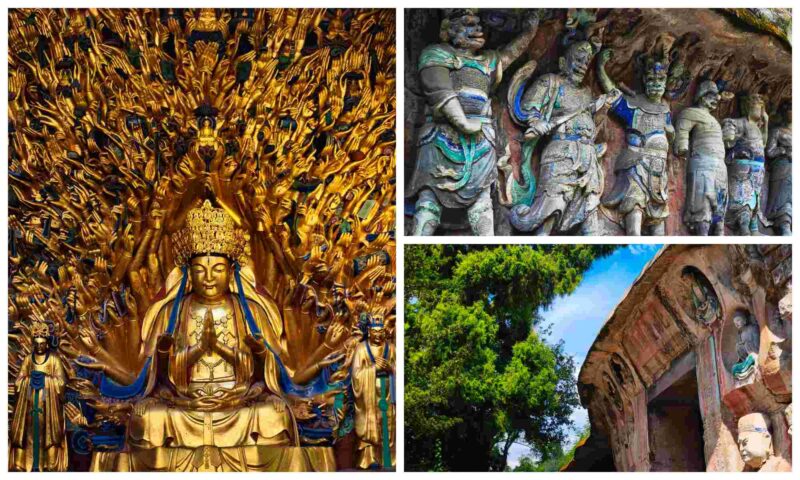
The carvings were overseen by the Song Dynasty monk Zhao Zhifeng and took 78 years to complete, from 1174 to 1252. The carvings here are not scattered Buddhist statues, but rather a series of Buddhist artistic sculptures with a complete narrative arc, much like a picture book carved into stone.
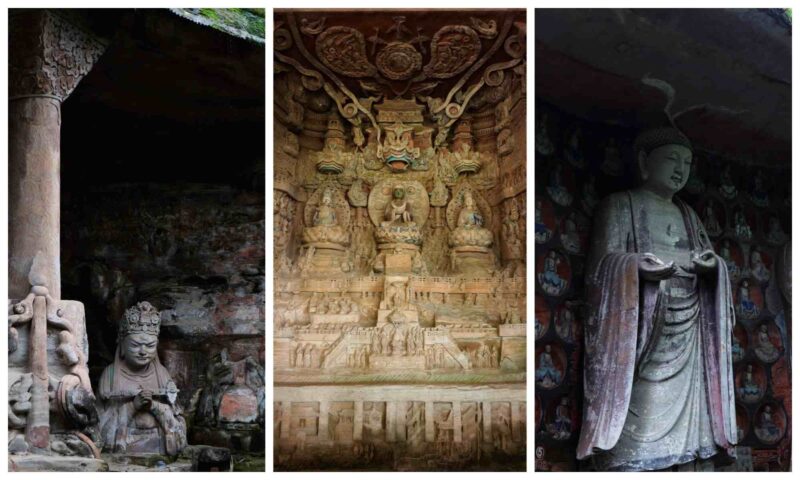
Upon entering the main gate, the first sight you’ll see is the Diagram of the Six Realms of Rebirth.
A massive wheel, held by a monster, is divided into six layers, representing the Realms of Heaven, Humans, Asuras, Animals, Hungry Ghosts, and Hell, respectively. According to Buddhist belief, after death, people are reborn into different realms based on their good or evil deeds in life.
Those who do good ascend to heaven, while those who do evil descend into hell. This carving serves as a visual reminder to people to do more good deeds.
Further ahead is the “Sutra on the Ten Great Kindnesses of Parents” relief.
This series of carvings depicts the ten acts of kindness parents show in raising their children, from the mother’s pregnancy and childbirth to the child’s growth, education, and marriage, with each stage rendered in great detail.
For example, the “Kindness of Swallowing Bitterness and Spitting Out Sweetness” scene shows a mother saving the best food for her child while eating the worst herself.
This series of carvings is deeply touching. It goes beyond religious content to serve as a record of ancient Chinese family life.
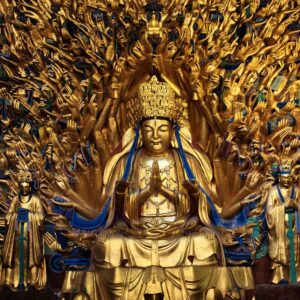
The most famous is the Thousand-Handed Guanyin. This statue of Guanyin stands 3 meters tall and has 1,007 hands, each with an eye in the palm and holding different ritual implements, such as an axe, a sword, a mirror, and a rope.
The entire statue is covered in gold leaf, which shimmers brilliantly under the lights, creating a truly spectacular sight. It is the largest surviving stone carving of the Thousand-Armed Guanyin in China. It took eight years to restore and was reopened to the public in 2015.
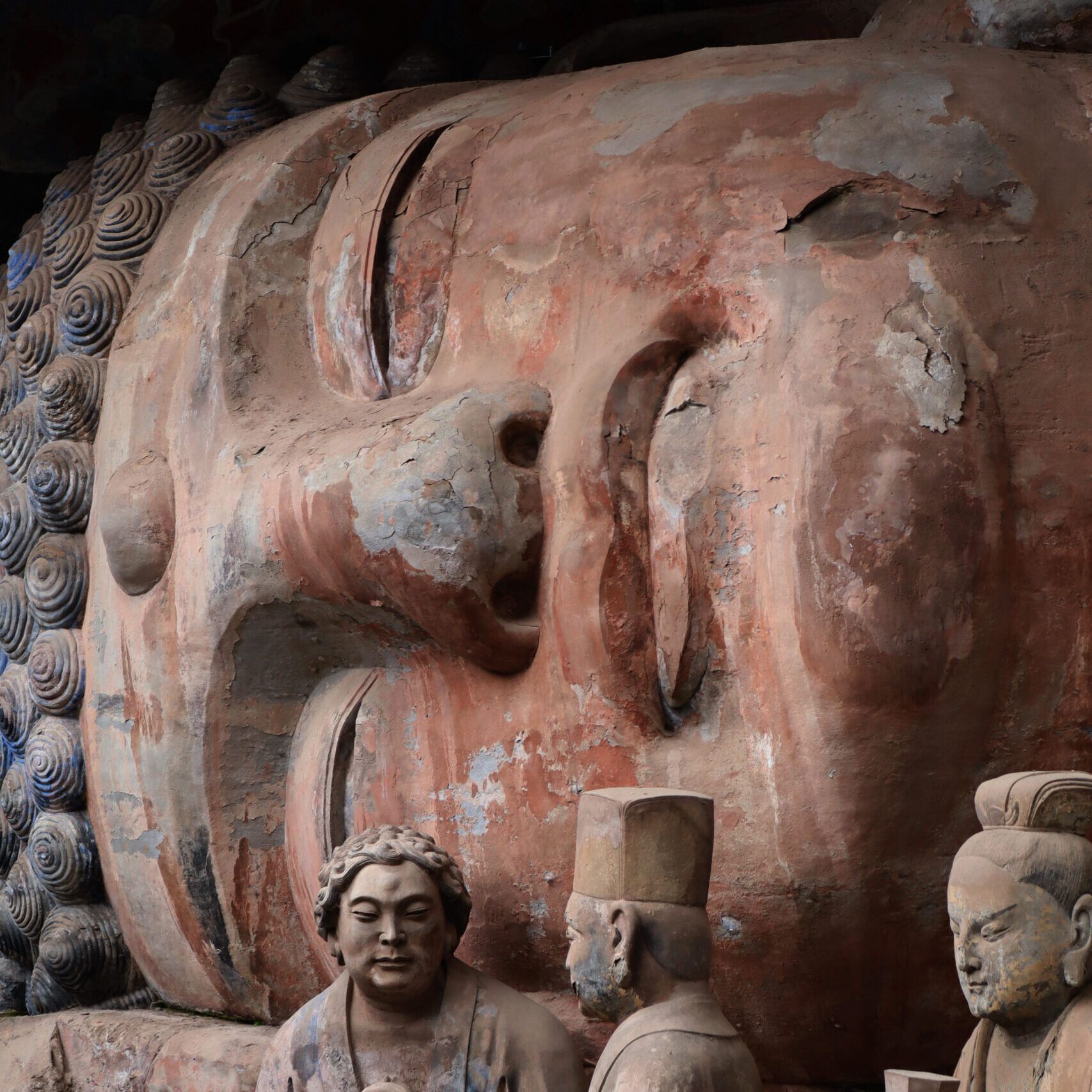
There is also a large Buddha statue known as the Shakyamuni Nirvana Statue, or the Reclining Buddha.
The statue lies on its side and is 31 meters long. Only the upper body is carved, while the lower body extends into the mountainside, symbolizing the boundlessness of the Dharma.
In front of the statue are more than a dozen carvings of disciples, each with a distinct expression. Some look sad, others serene.
The stone carvings at Baoding Mountain are notable for their strong sense of realism. In addition to the Buddha statues, they depict scenes from everyday life, such as slaughtering pigs, raising chickens, drinking alcohol, and playing chess.
The tour guide will explain the stories and meanings behind each group of carvings in English, and after the tour, you’ll gain a deeper understanding of ancient Chinese culture and beliefs.
The entire tour of Baoding Mountain takes about 2.5 to 3 hours, consisting of flat paths and gentle slopes, so it’s not tiring to walk. The scenic area provides free audio guides, but our tour guide’s explanations are more vivid and can answer any questions you may have.
In the afternoon, return to downtown Chongqing, and enjoy the evening at your leisure. You can rest at the hotel or ask your tour guide to recommend a nearby night market.
If your time is limited, you may also want to check out our Chongqing 3 Days 2 Nights Itinerary, designed specifically for visitors with short stays.
Day 4 of Your Chongqing 7 Days 6 Nights Tour: Wulong Three Natural Bridges, a World Natural Heritage Site
After breakfast, take a bus to Wulong District, a drive of about 2.5 hours.
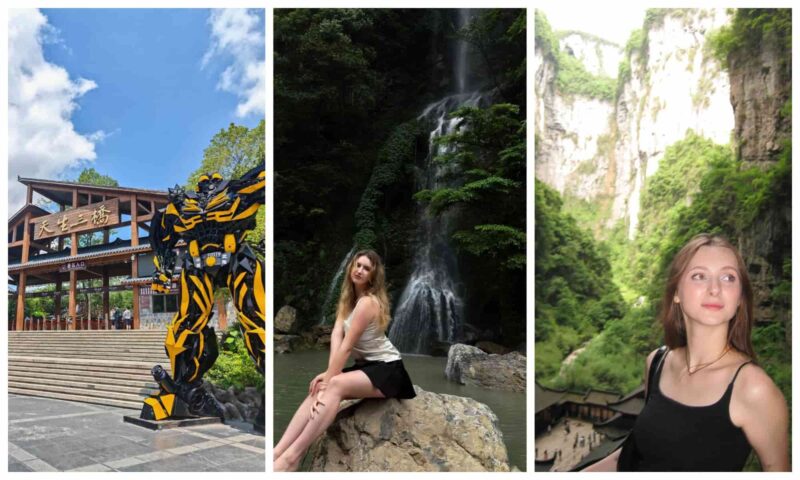
Wulong Three Natural Bridges is a World Natural Heritage Site, inscribed on the list in 2007 as part of the “South China Karst.” This site also served as a filming location for the movies Transformers 4 and The Curse of the Golden Flower.
The scenic area features three naturally formed stone arch bridges: Tianlong Bridge, Qinglong Bridge, and Heilong Bridge.
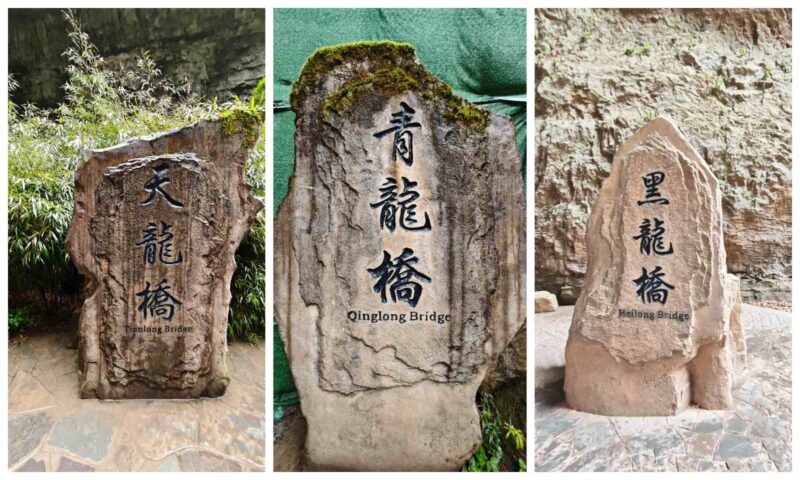
These three bridges were formed over millions of years by groundwater eroding limestone.
Between the bridges lie two sinkholes, creating the unique landscape of “three bridges flanking two sinkholes,” a sight found nowhere else in the world.
Upon entering the scenic area, visitors first take an 80-meter-high observation elevator down to the valley floor. The elevator is fully transparent, offering views of the cliffs and bridge arches outside.
Upon exiting the elevator, visitors look up to see Tianlong Bridge, which stands 235 meters high with a span of 34 meters. Its arch resembles a massive city gate.
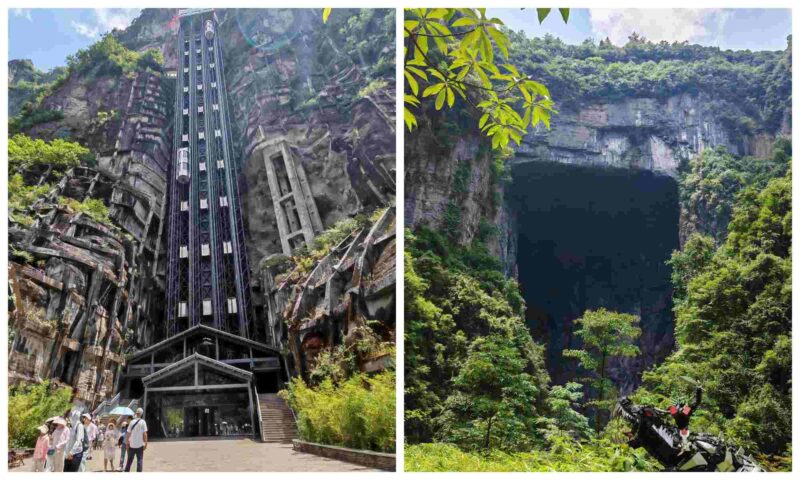
Beneath Tianlong Bridge lies a traditional courtyard compound called Tianfu Official Inn.
This was a filming location for the movie The Curse of the Golden Flower. Built in an ancient style with blue-glazed tiles and gray walls, it appears particularly small beneath the massive bridge arch.
Standing at the valley floor and looking up, the stone bridge resembles a natural roof, enveloping the entire courtyard beneath it. A truly awe-inspiring sight.
Further ahead lies Qinglong Bridge, the tallest of the three bridges at 281 meters. The arch resembles a large sword.
Sunlight streaming through it casts a sword-shaped patch of light onto the ground. When you walk through the arch and look back, it takes on the shape of a carp.
This is the famous “Carp Leaping Over the Dragon Gate” sight.
The third bridge is Black Dragon Bridge. Its arch is quite deep and dimly lit, which is why it’s called Black Dragon Bridge. Several streams of spring water flow down the rock walls of the arch, known as the “Three-Tiered Springs.” The droplets make a tinkling sound as they hit the stones.
It’s very cool inside the arch. In summer, the temperature stays around 20 degrees Celsius, making it a natural air conditioner.
It takes about 1.5 hours to walk across all three bridges. The entire route consists of descending steps and flat paths, so it’s not tiring. There are many photo spots along the way, and the tour guide will tell you which angles yield the best shots.
We’ll also visit the Longshui Gorge.
Longshui Gorge is about a 10-minute drive from the Three Natural Bridges.
It is a long, narrow canyon, 2 kilometers long and 200 to 500 meters deep, with a narrowest point of just 1 meter wide. Steep limestone cliffs line both sides, covered with green ferns and vines.
After entering the scenic area, you’ll first take an elevator down to the valley floor, 150 meters below, and then walk along the boardwalk. In some places, the boardwalk is suspended in mid-air, with streams and deep pools right below your feet.
There are several waterfalls in the gorge. The largest is called “Milky Way Waterfall,” where water plunges from an 80-meter-high cliff face, and the mist drifts across your face, feeling cool and refreshing.
The air in the gorge is exceptionally fresh, with a high concentration of negative oxygen ions, earning it the nickname “Natural Oxygen Bar.” Walking through it, listening to the sound of water and birdsong, and gazing at the green rock walls and white waterfalls, you’ll feel completely relaxed.
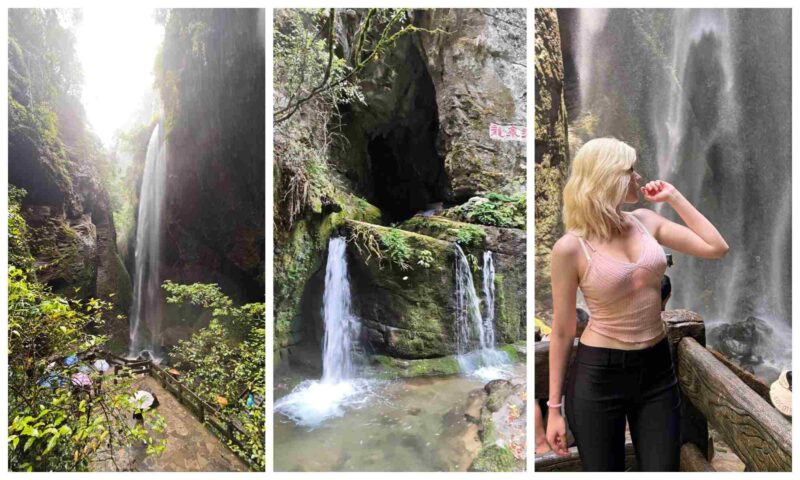
The entire hike takes about 1.5 hours. While there are many steps, they’re all equipped with guardrails, making it very safe.
The attractions in Wulong are quite far apart, and public transportation is inconvenient. If traveling independently, you’ll need to take a train from Chongqing to Wulong, then transfer to a bus to reach the scenic area.
Most of the day will be spent traveling. Joining a guided tour provides dedicated shuttle service, saving you both time and hassle.
Return to Chongqing in the afternoon. In the evening, you can visit the “One Tree on Nanshan” Observation Deck.
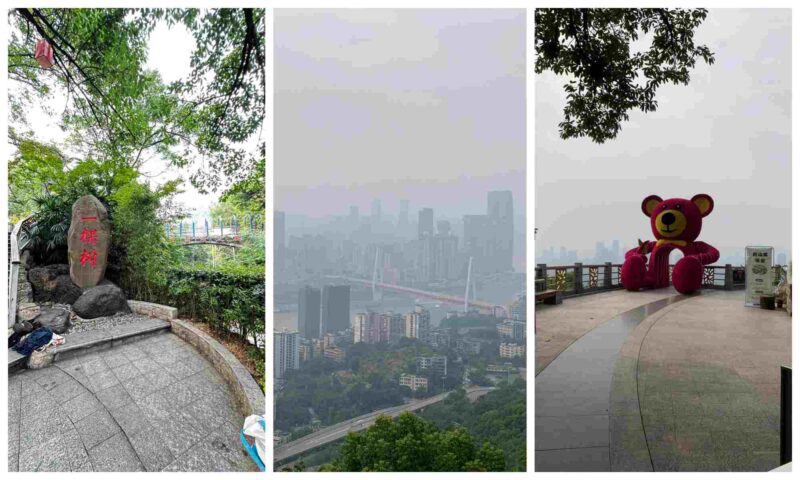
Located on Nanshan Mountain in Chongqing’s Nan’an District, the “One Tree on Nanshan” Observation Deck sits at an elevation of over 400 meters and offers the best views of Chongqing’s nightscape.
The observation deck takes its name from a centuries-old yellow banyan tree, which still stands today, with a multi-level viewing platform built beside it.
Standing on the observation deck, the entire Yuzhong Peninsula unfolds before your eyes. Below lie the Yangtze and Jialing Rivers, with illuminated sightseeing boats gliding slowly across the water.
Across the river, high-rises stand densely packed, their lights merging into a single expanse that resembles a glowing Milky Way. On clear days, you can see Hongyadong and Raffles City in the distance.
We recommend arriving half an hour before sunset to first take in the cityscape by day. As the sky gradually darkens and the lights come on one by one, the transition is particularly beautiful. The observation deck can get quite crowded, but we’ll help you find a good spot.
Day 5 of Your Chongqing 7 Days 6 Nights Package: Fengdu Mingshan — Exploring China’s Ghost and Spirit Culture
After breakfast, take a bus to Fengdu County, a journey of about 2 hours. Fengdu Mingshan, also known as the “Ghost City,” is China’s only scenic area themed around ghost and spirit culture.
It is located on the north bank of the Yangtze River at an elevation of 288 meters.
The Fengdu Ghost City has a history of over 2,000 years. Legend has it that during the Han Dynasty, two men named Yin Changsheng and Wang Fangping cultivated themselves to become immortals on this mountain.
Later generations combined their surnames to form “Yin Wang,” which gradually evolved into the belief that this was the residence of the “King of the Underworld,” thus turning the place into the “Ghost City.”
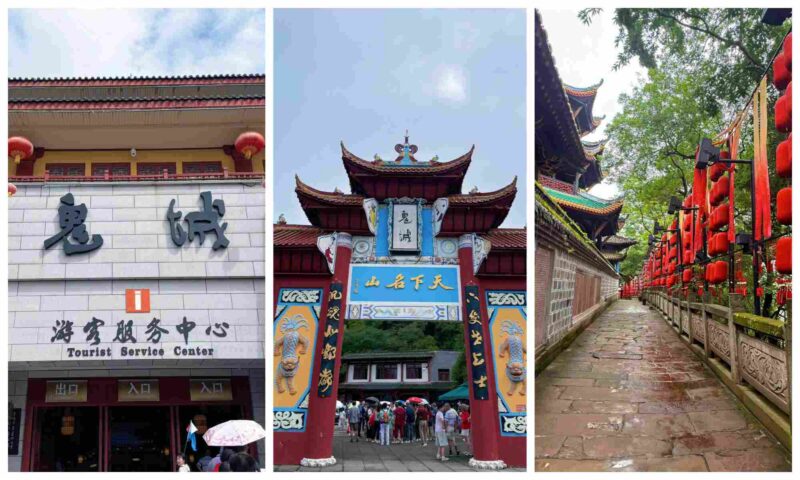
Upon entering the scenic area, you’ll first cross the Naihe Bridge. The Naihe Bridge is a stone arch bridge built during the Ming Dynasty, with a history of over 500 years.
There are three bridges: the central one is Naihe Bridge, the one on the left is Health Bridge, and the one on the right is Wealth Bridge. According to folklore, after death, people must cross Naihe Bridge and drink Meng Po’s Soup to forget their past lives.
The tour guide will explain the customs for crossing the bridge. For example, men must step forward with their left foot first, while women must step forward with their right foot first, and you must not look back while crossing.
After crossing Naihe Bridge and walking uphill, you’ll reach the Ghost Gate. The Ghost Gate is an archway-style structure with two statues of green-faced, fanged ghost officers at the entrance.
Legend has it that after death, when one arrives in the underworld, the first gate they encounter is the Ghost Gate, where their good and bad deeds during their lifetime are examined. Those who have committed more evil deeds are barred from entering the city.
Further up lies the Road to the Underworld. This stone-paved path is lined with cypress trees on both sides, creating a somewhat eerie atmosphere. At the end of the road stands the Homecoming Terrace.
Legend has it that after death, people can stand here to take one last look at their hometown and loved ones before bidding a final farewell to the living world.
At the mountaintop stands the Emperor’s Hall, the largest structure in the Ghost City and the workplace of King Yama. Inside the hall stands a 4-meter-tall seated statue of King Yama, with a dark face and long beard, exuding an intimidating aura.
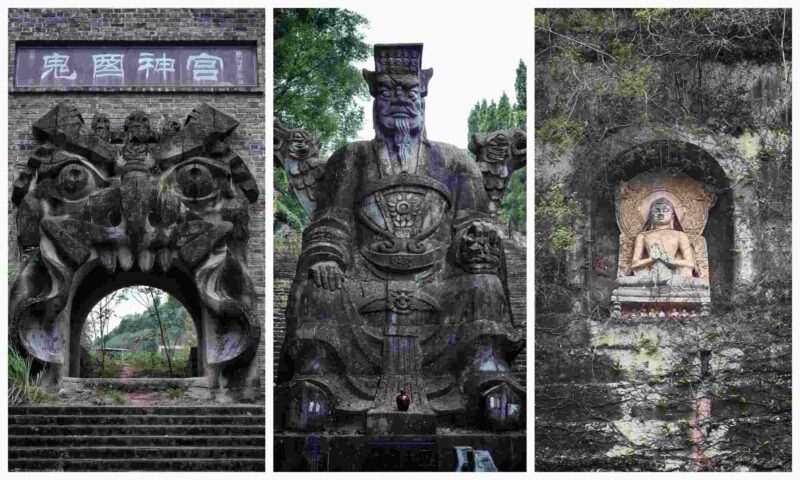
Flanking him are statues of the Six Bureau Judges and the Ten Great Commanders of the Underworld, along with clay sculptures depicting the Eighteen Levels of Hell, which showcase various scenes of torture, such as climbing the Mountain of Knives, being plunged into cauldrons of boiling oil, and having one’s tongue pulled out.
Although these sculptures look terrifying, they are actually meant to encourage people to do good and remind them that evil deeds will be met with retribution.
Mingshan is situated on the banks of the Yangtze River. From the observation deck at the summit, you can see the vast expanse of the river and the new Fengdu county seat across the water.
On clear days, you can spot cargo ships and sightseeing boats traveling up and down the river.
If you’re interested in a Yangtze River cruise, we can also replace this leg of the itinerary with a cruise experience, sailing downstream from Chongqing to take in the scenery of the Three Gorges. Please contact customer service to customize a specific itinerary.
Return to downtown Chongqing in the afternoon. In the evening, enjoy a meal featuring “Jianghu-style cuisine.”
Jianghu-style cuisine is a favorite among locals in Chongqing. Unlike hot pot, these are stir-fried dishes with a richer variety of flavors.
They are characterized by bold ingredient combinations, intense flavors, and generous portions. Must-try dishes include Spicy Chicken, Boiled Fish, Maoxuewang, Laifeng Fish, and Pickled Cabbage Fish.
Spicy Chicken involves cutting chicken into small pieces and stir-frying it with a generous amount of dried chili peppers and Sichuan peppercorns.
When eating, you search for the chicken among the chili peppers. It’s both spicy and fragrant. Boiled Fish features fish slices placed in a piping-hot, oily broth, resulting in tender, smooth fish that’s thoroughly infused with numbing and spicy flavors.
Maoxuewang is a stew made with duck blood, beef tripe, beef esophagus, and bean sprouts. It’s a hearty dish that goes perfectly with rice.
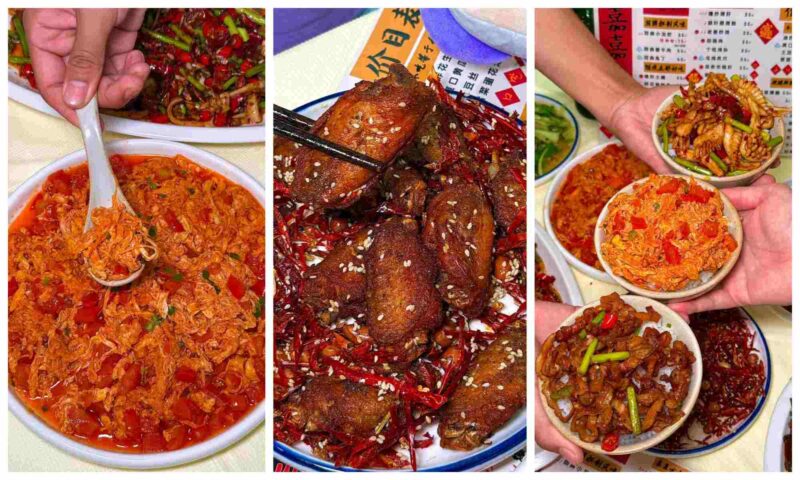
We’ll take you to a local “Jianghu-style” restaurant frequented by locals, where the flavors are authentic and the prices are reasonable.
Day 6 of Your Chongqing 7 Days 6 Nights Tour: In-Depth Culture, the Flavors of Old Chongqing
After breakfast, visit the Chongqing China Three Gorges Museum.
The Chongqing China Three Gorges Museum is the largest museum in Chongqing, a National First-Class Museum, and admission is free. The building’s exterior is distinctive, resembling a giant crystal palace with a large plaza in front.
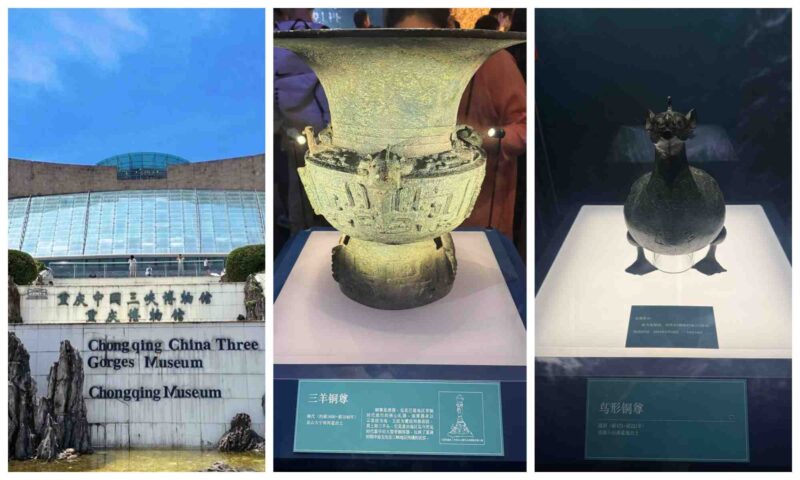
The museum spans four floors, with exhibition space covering over 20,000 square meters, and houses a collection of more than 100,000 cultural relics.
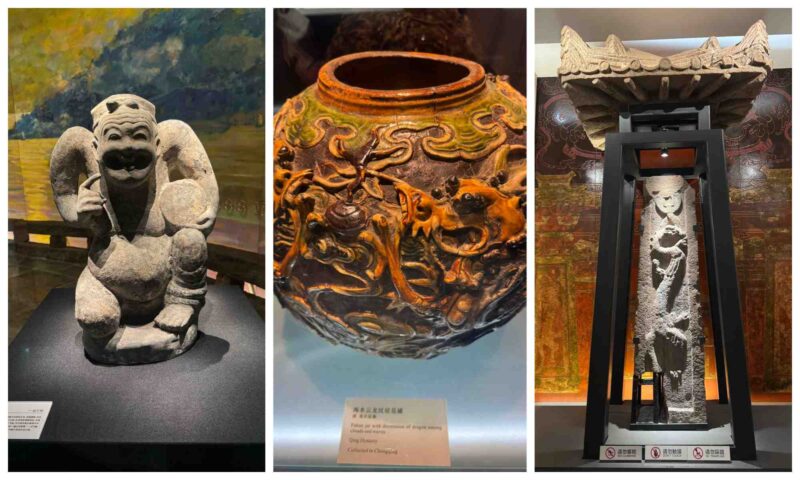
The highlight is the “Magnificent Three Gorges” hall. This exhibition hall uses models, artifacts, and multimedia to recreate the natural landscape and historical culture of the Yangtze River’s Three Gorges.
It features old photographs taken before the construction of the Three Gorges Dam, bronze artifacts and suspended coffins unearthed in the Three Gorges region, as well as a 1:1 scale scene depicting boatmen pulling boats through the gorges.
Here, you can see what the Three Gorges looked like before the construction of the Three Gorges Project.
The “Ancient Ba-Yu” hall showcases the history of the Chongqing region from the Paleolithic Era through the Shang and Zhou dynasties.
The most famous artifact is the “Wuyang Han Gate,” a 6-meter-tall stone gate from the Han Dynasty carved with reliefs of figures and animals.
It is one of the most intact Han-era gates still in existence in China. Also on display are bronze artifacts from the Ba Kingdom, such as the tiger-knobbed gong, a musical instrument used by the ancient Ba people in battle.
The “Chongqing: The City’s Journey” hall recounts Chongqing’s history from a small riverside town to a directly administered municipality.
It features scale models of Old Chongqing’s streetscapes, artifacts from the War of Resistance, and an introduction to Chongqing’s industrial development. Visitors interested in Chongqing’s history should not miss this hall.
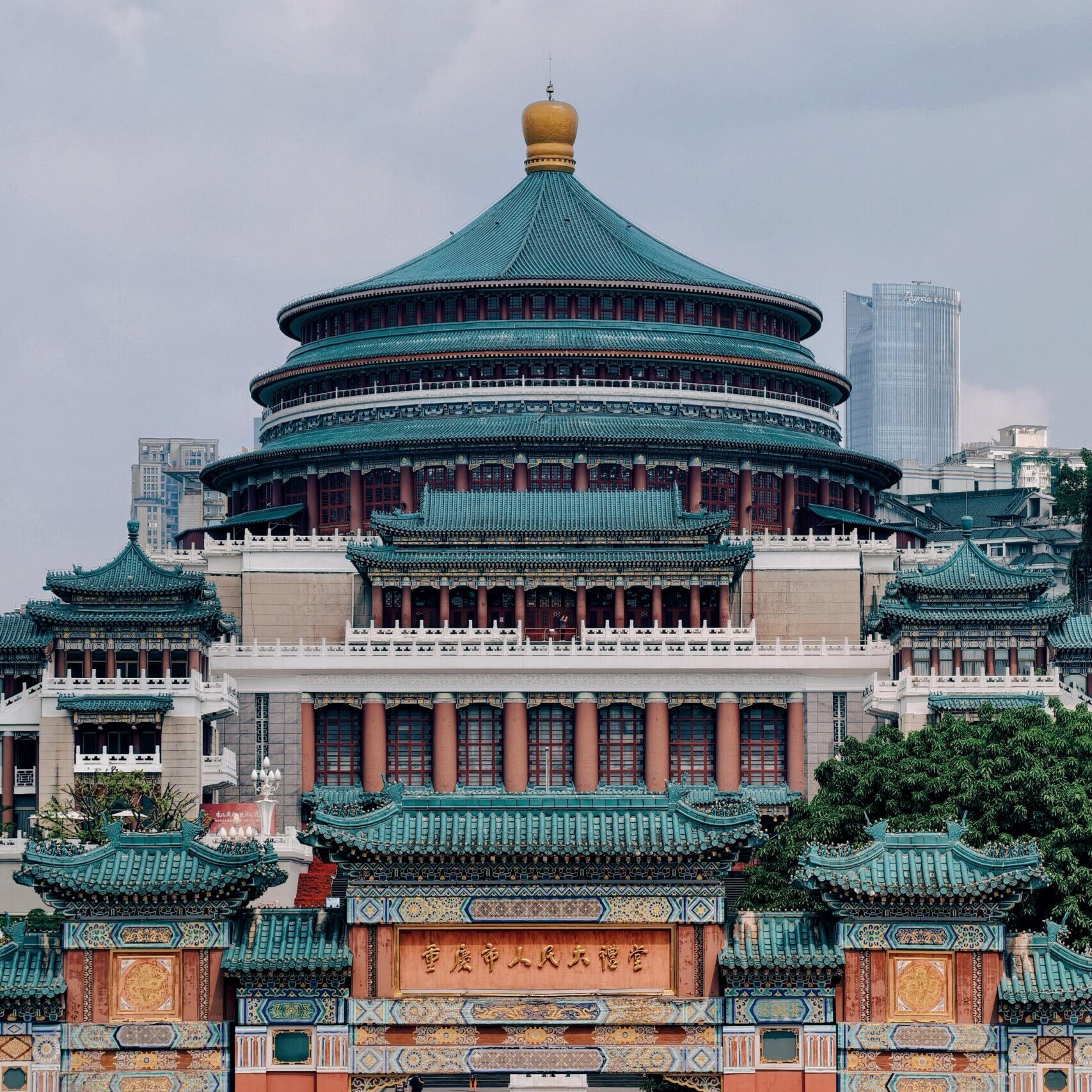
Adjacent to the museum is the People’s Grand Hall.
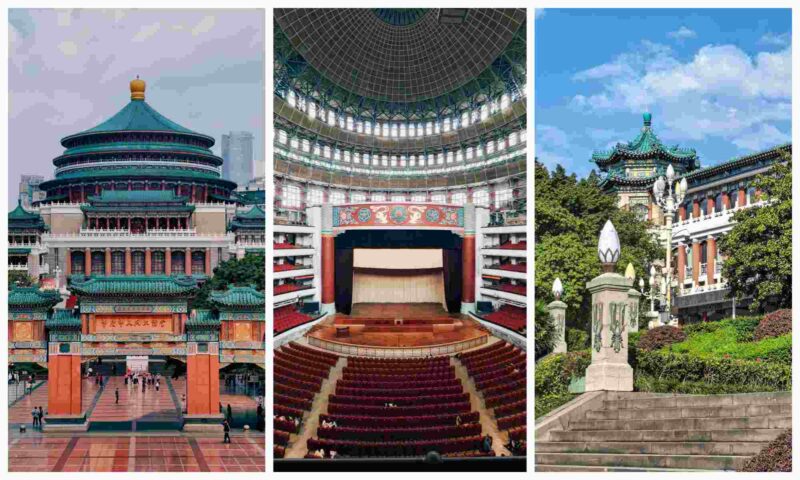
Built in 1951, the People’s Grand Hall is one of Chongqing’s iconic landmarks. Designed by Zhang Jiade, its architectural style blends traditional Chinese architecture with modern elements.
The Grand Hall’s roof is covered with green glazed tiles, resembling the Hall of Prayer for Good Harvests at Beijing’s Temple of Heaven. Below, red columns and white railings support a massive circular dome at the center.
Standing 65 meters tall with a diameter of 46 meters, the Grand Hall can accommodate over 4,000 people. It used to be a venue for Chongqing residents to hold meetings and large-scale events, and today it is also used for concerts and performances.
You can go inside to explore. The interior decoration is exquisite, with painted murals on the ceiling and crystal chandeliers that are truly magnificent.
In front of the Grand Hall is a large square called People’s Square, where many locals gather to dance, practice tai chi, and fly kites. You can take photos here and get a feel for the daily life of Chongqing residents.
In the afternoon, head to the E’ling No. 2 Factory Cultural and Creative Park.
The E’ling No. 2 Factory was formerly known as the Chongqing Printing Plant No. 2. Built in 1953, it was once Chongqing’s largest color printing plant, having printed numerous banknotes and ration coupons.
After the factory relocated, the old factory buildings were transformed into a cultural and creative park, which officially opened in 2016.
The park retains the industrial style of the old factory buildings: red brick walls, iron staircases, and vintage machinery, which blend seamlessly with new cafes, bookstores, and exhibition spaces, creating a unique atmosphere.
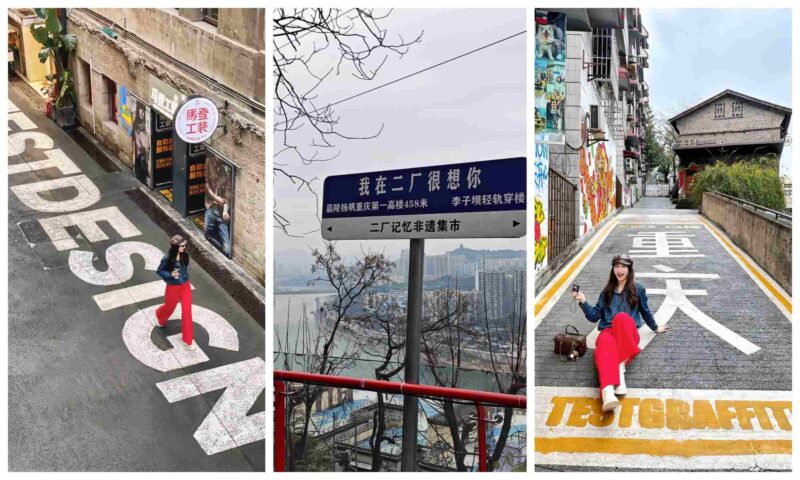
The park is home to many interesting small shops, such as handmade leather goods stores, independent bookstores, vintage clothing shops, and pottery studios. You can take your time strolling around and pick up some one-of-a-kind souvenirs.
Factory No. 2 was also a filming location for the movie Passing Through Your Whole World. The radio station scene in the film was shot on the rooftop of Factory No. 2. That rooftop is still there today, featuring movie posters and quotes. It’s a great spot for photos and check-ins.
The rooftop offers excellent views of Chongqing’s cityscape, with the Yangtze River and skyscrapers visible in the distance.
There are many cafes and restaurants within the park, so when you get tired from exploring, you can sit down for a cup of coffee or a bite to eat.
We recommend trying a local Chongqing coffee brand. The beans are roasted locally and taste great.
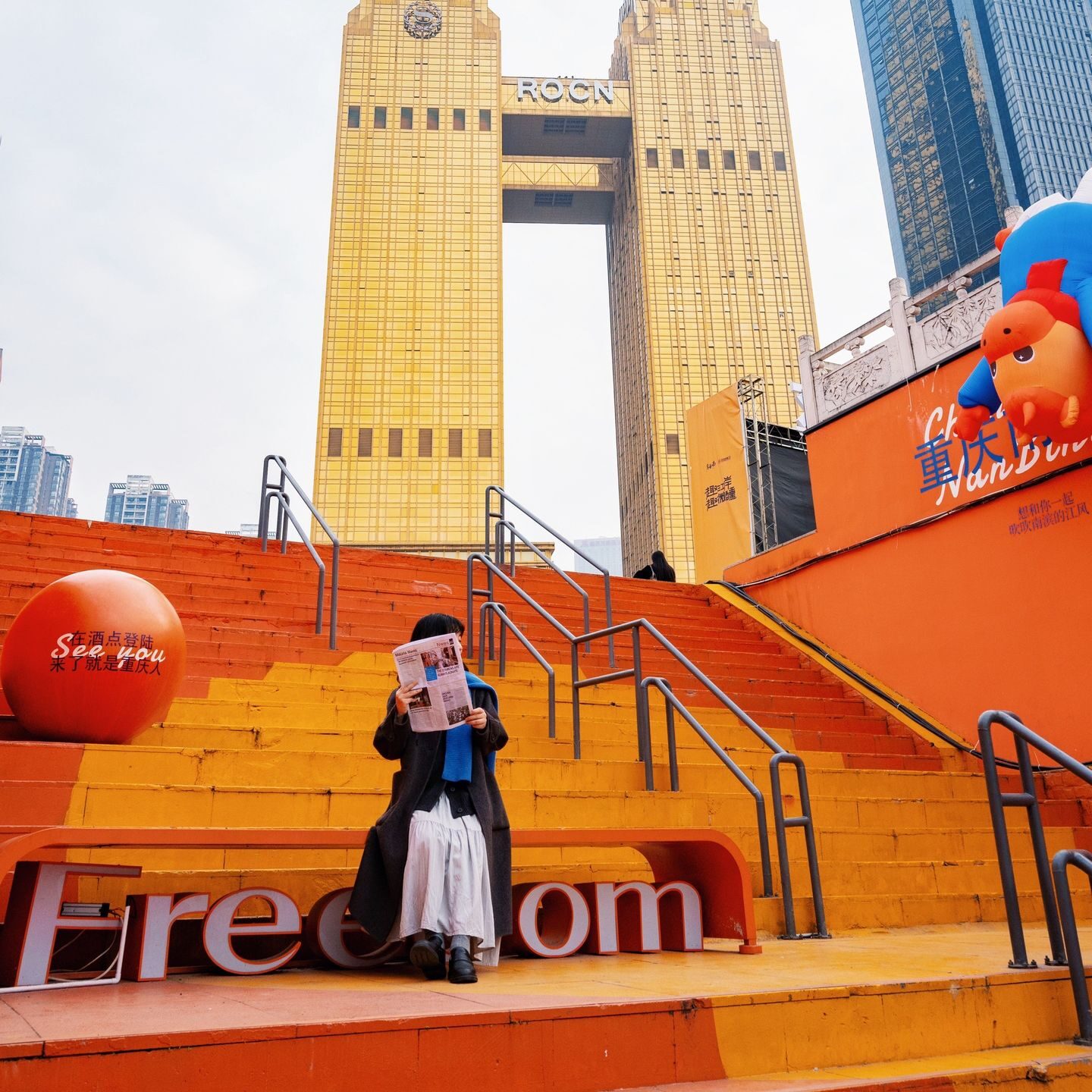
In the evening, take a stroll along Nanbin Road by the Yangtze River.
Nanbin Road is located in Chongqing’s Nan’an District. Stretching 18 kilometers along the Yangtze River, it’s Chongqing’s most beautiful riverside promenade.
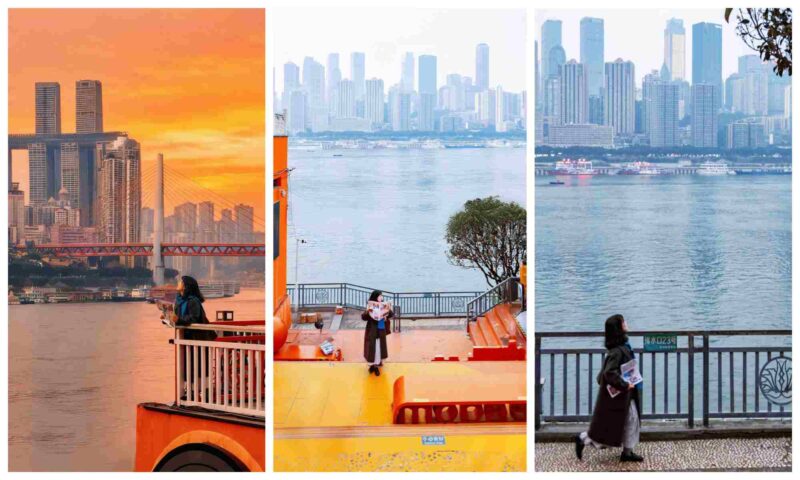
On one side is the Yangtze River, and on the other are various restaurants, bars, and hotels. Across the river lies the Yuzhong Peninsula, Chongqing’s most bustling area.
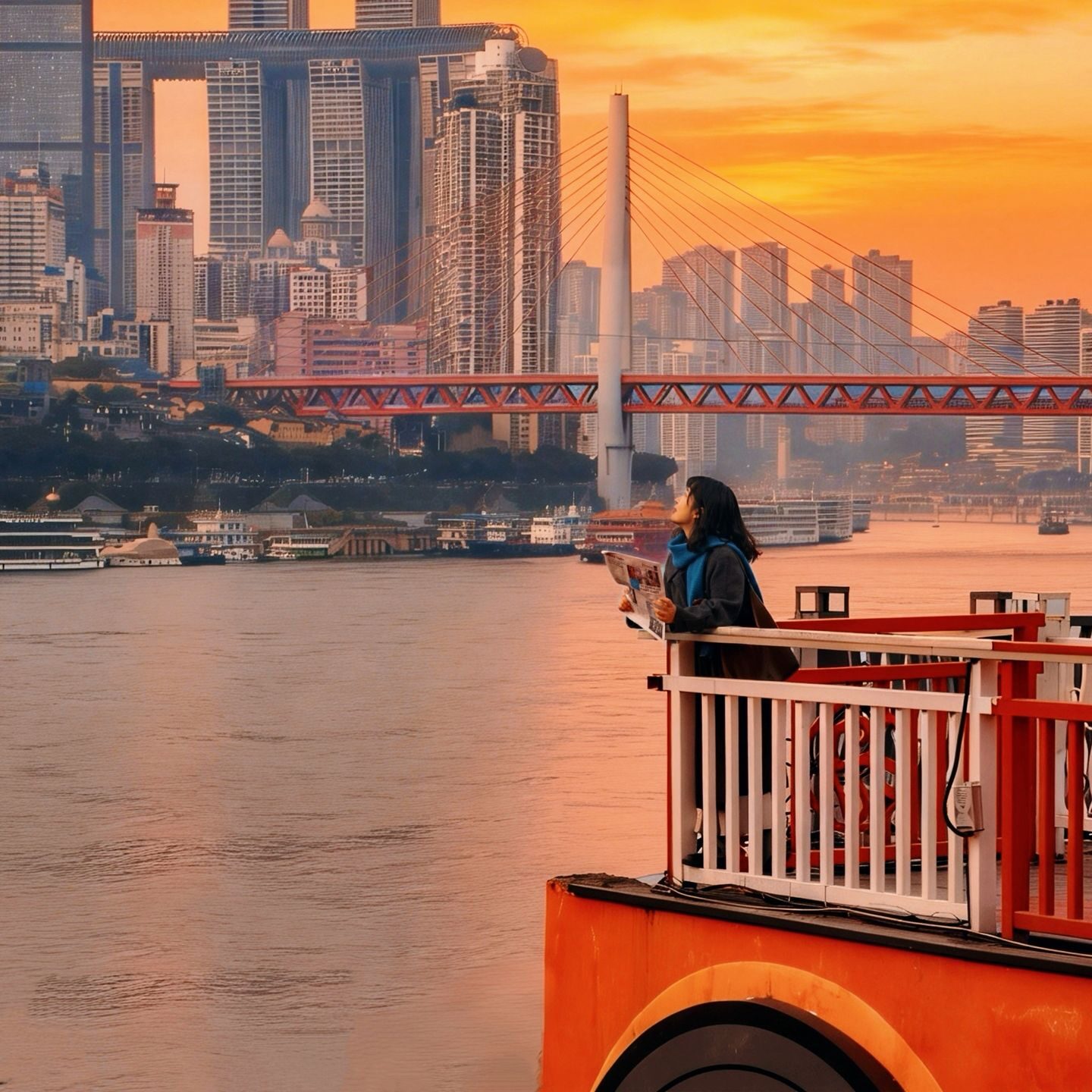
Nanbin Road offers incredibly expansive views and is a great spot to admire Chongqing’s skyline. You can see the skyscrapers of Raffles City, Hongyadong, and Jiefangbei across the river.
At sunset, as the sun dips behind the skyscrapers, the sky turns orange-red, and the river reflects the light. It’s truly beautiful.
There are several viewing platforms along Nanbin Road, such as Yanyu Park and Haitangxi Pier, where you can stop to take photos. Cruise boats glide slowly along the river, illuminated by colorful lights, while cargo ships haul sand upstream.
Along the riverbank, many people are jogging, walking their dogs, or playing with their children. The atmosphere is full of the vibrancy of daily life.
In the evening, we’ll hold a farewell dinner featuring an exquisite selection of Chongqing cuisine to wrap up your journey.
If you’re planning a shorter but still comprehensive trip, our Chongqing 4 Days 3 Nights Itinerary covers the city’s best highlights at a relaxed pace.
Chongqing 7 Days 6 Nights — Day 7: Airport/Train Station Transfer, Ending a Pleasant Journey
After breakfast, depending on your flight or train schedule, the driver will take you to the airport or train station.
If you have an afternoon or evening flight, you can add a short morning excursion. For example, you could visit a supermarket to buy local specialties like hot pot seasoning and Chen’s twisted pastries to take home.
Our driver can accompany you, help with translation, and carry your bags.
Upon arrival at the airport, our service concludes. We hope this trip to Chongqing has left you with wonderful memories.
Why a Guided Tour Is Better Than Independent Travel in Chongqing
Chongqing has a unique topography. The city is built on mountains, with roads that rise and fall, often causing navigation systems to give incorrect directions.
For the same address, a map might show it as being on the 1st floor, when in reality it could be on the 11th floor. Traveling independently makes it easy to get lost, which wastes time and dampens your spirits.
There are countless Things to do in Chongqing, from ancient rock carvings to modern sky bridges.
But many of the best spots are scattered in the suburbs, such as the Dazu Rock Carvings, Wulong’s Three Natural Bridges, and Fengdu’s Mingshan.
There is no direct public transportation to these locations, so traveling on your own requires multiple transfers. You’ll likely only be able to visit one place per day and might even miss the last bus.
Our Chongqing tour packages include a private car, a professional tour guide, and pre-booked admission tickets. Our guides know every road, the best times to visit when crowds are lightest, and which restaurants serve the most authentic cuisine.
You don’t need to do any research. Just follow along.
We also offer English-speaking tour guides who provide commentary in English throughout the trip, ensuring smooth communication. Our hotels and restaurants are long-term partners, so quality is guaranteed.
If you’d like to plan your own itinerary, you can start by browsing our website to get an idea of the general routes and things to keep in mind. However, we ultimately recommend joining a guided tour, especially for first-time visitors to Chongqing.
More Chongqing Attractions and Itineraries We Offer
Chongqing Attractions are incredibly diverse, and even a full week is only enough to see a fraction of them. In addition to this 7-day journey, we have packages of other durations to choose from:
3 day yangtze river cruise chongqing china: Sail from Chongqing through the Three Gorges, with all meals and accommodations included onboard.
Chongqing 5 days 4 nights tour: Covers the city’s top highlights plus Wulong’s Three Natural Bridges, ideal for travelers with limited time.
Short-break options: Weekend getaways covering Hongyadong, the Yangtze River Cable Car, and Ciqikou Ancient Town.
Custom extensions: Add Jinfeng Mountain, Simian Mountain, or Taohuayuan to any itinerary.
If there are specific places you’d like to visit, just let us know, and we’ll help you add them to your itinerary.
Inquire Now to Get a Quote for Your Chongqing 7 Days 6 Nights Tour
This Chongqing 7 Days 6 Nights itinerary serves as a basic framework, and we can adjust it according to your needs. For example, if you don’t eat spicy food, we’ll arrange restaurants with milder cuisine.
If you’re traveling with the elderly or children, we’ll minimize walking and stairs. If you enjoy photography, we’ll schedule specific times for sunrise and nightscape photography.
Prices for the Chongqing 7 Days 6 Nights package vary based on group size, hotel category, and travel season. Tours depart with a minimum of 2 people, anytime. No group merging, no shopping stops, just a pure sightseeing experience.
Contact our customer service team right now via the floating tool on the right side of the website. Let us know your travel dates and group size, and we’ll send you a detailed itinerary and quote within 2 hours. All free of charge.
We are a local Chongqing travel agency with 12 years of experience in international ground handling, having hosted travelers from over 30 countries.
Choosing us means choosing peace of mind. We look forward to seeing you in Chongqing.
Chongqing 7 Days 6 Nights Itinerary at a Glance
| Day | Theme | Morning | Afternoon | Evening | Meals |
| Day 1 | Arrival & Mountain City Welcome | Arrival at CKG Airport / Chongqing North Railway Station; private transfer to downtown hotel; check-in | Jiefangbei Pedestrian Street; try Chongqing noodles | Hongyadong stilted building complex; night view & photo session at Qiansimen Bridge | — |
| Day 2 | 8D Magic City Highlights | Yangtze River Cable Car (cross-river ride); Liziba Light Rail Station (train-through-building) | Ciqikou Ancient Town; snack tasting & teahouse experience | Mountain City Trail cliffside walk; authentic Chongqing hot pot dinner | Breakfast, Dinner |
| Day 3 | Dazu Rock Carvings (UNESCO) | 2-hour drive to Dazu; Baoding Mountain scenic area — Six Realms of Rebirth, Thousand-Handed Guanyin, Reclining Buddha | Continue Baoding Mountain tour; drive back to Chongqing | Free time; optional night market visit | Breakfast, Lunch |
| Day 4 | Wulong Three Natural Bridges (World Natural Heritage) | 2.5-hour drive to Wulong; Three Natural Bridges — Tianlong, Qinglong & Heilong bridges; Tianfu Official Inn | Longshui Gorge (skywalk, waterfalls, natural oxygen bar); drive back to city | One Tree on Nanshan Observation Deck — panoramic Chongqing night view | Breakfast, Lunch |
| Day 5 | Fengdu Ghost City & Yangtze Culture | 2-hour drive to Fengdu; Ghost City — Naihe Bridge, Ghost Gate, Emperor’s Hall, Eighteen Levels of Hell | Yangtze River viewpoint at summit; drive back to Chongqing | Jianghu-style cuisine dinner (Spicy Chicken, Boiled Fish, Maoxuewang) | Breakfast, Lunch, Dinner |
| Day 6 | Deep Culture & Old Chongqing Flavors | Chongqing China Three Gorges Museum; People’s Grand Hall | E’ling No. 2 Factory Cultural & Creative Park (former printing plant, cafes, rooftop views) | Nanbin Road riverside stroll; farewell dinner | Breakfast, Dinner |
| Day 7 | Departure | Hotel checkout; optional supermarket visit for local souvenirs (hot pot base, Chen’s Twisted Doughnuts) | Private transfer to airport / railway station according to flight or train schedule | — | Breakfast |
Package Inclusions
| Item | Details |
| Transportation | Private air-conditioned vehicle with professional driver for all 7 days |
| Guide | English-speaking tour guide throughout the trip |
| Hotels | 6 nights accommodation in downtown Chongqing (3-star / 4-star / 5-star options available) |
| Meals | 6 breakfasts + selected lunches and dinners as listed above |
| Tickets | All entrance fees for attractions listed in the itinerary |
| Pickup & Drop-off | Airport / railway station arrival and departure transfers |
Reviews
There are no reviews yet.